

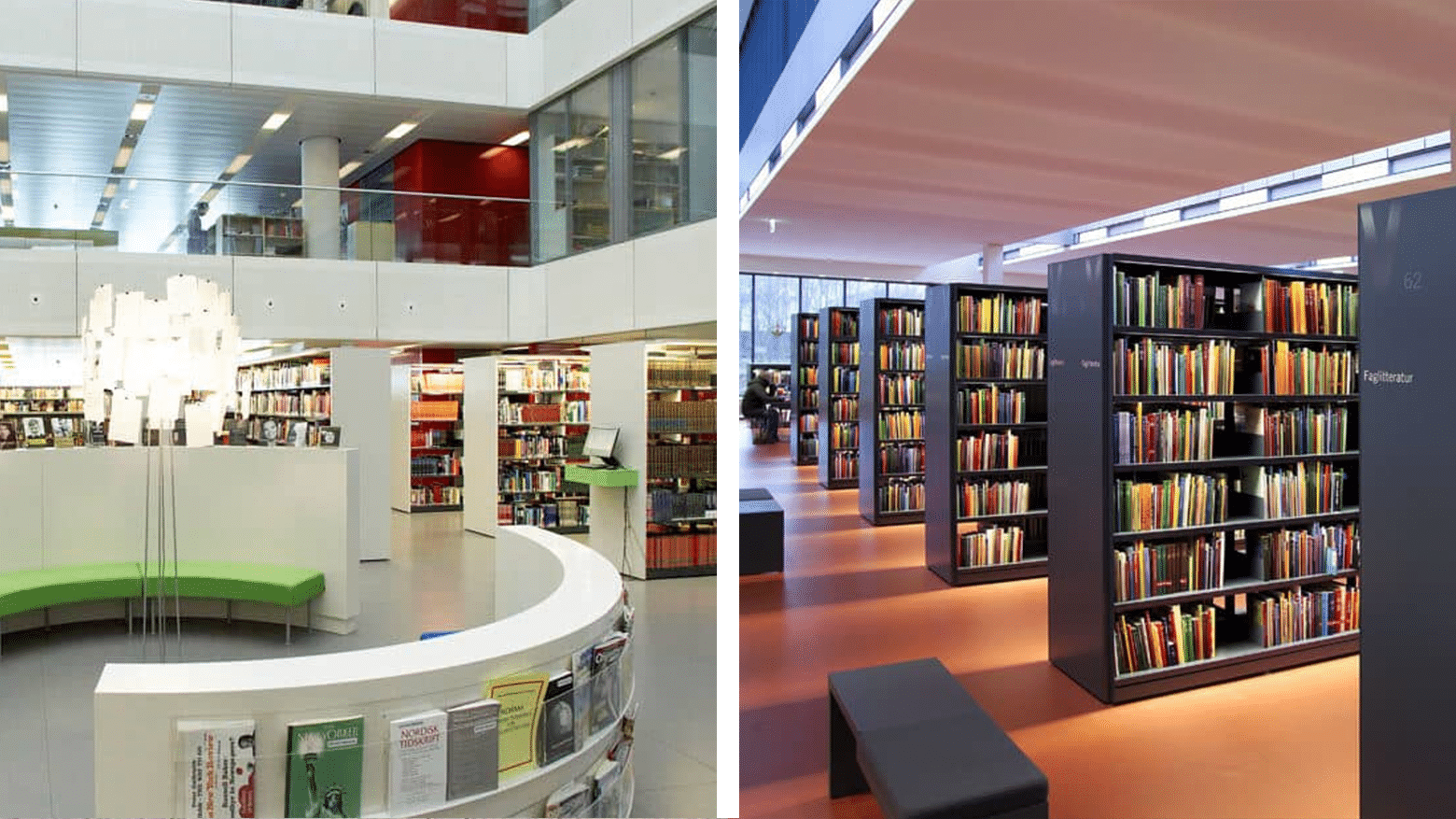
A well-designed library is about more than books, shelving, and furniture. The way a space is illuminated can influence how visitors navigate it, where they choose to spend time, and how effectively different areas support reading, studying, collaboration, and discovery.
In today’s libraries, lighting is an important part of creating the right atmosphere and a functional environment. From natural daylight to integrated shelving illumination, a thoughtful lighting strategy can help define zones, highlight collections, and contribute to the overall character of a space.
As BCI Libraries works with architects, designers, and library professionals to create modern library environments, lighting is one of the many elements that can work alongside furniture and shelving to create a more cohesive experience.
Why Is Lighting Important in Library Design?
Lighting is important in library design because libraries accommodate many different activities, each with different visual and environmental needs.
A visitor browsing a collection has different needs than someone reading at a table, working on a laptop, attending a program, or moving through a circulation area. A successful library environment recognizes these differences rather than treating the entire building as one uniform space.
The Illuminating Engineering Society (IES) publishes a specific Recommended Practice for Lighting Library Spaces, which addresses the varied visual tasks performed by library visitors and staff and the importance of balancing lighting quality with energy considerations.
That makes lighting both a practical consideration and a design opportunity.
Lighting Can Help Define Different Library Zones
Modern libraries serve many purposes. They can include quiet reading areas, collaborative workspaces, children’s sections, technology areas, meeting spaces, displays, and community gathering areas within a single building.
Lighting can help visually distinguish these spaces. Rather than relying exclusively on walls or physical barriers, different lighting approaches can reinforce how an area is intended to be used. A quiet reading area may have a different atmosphere from a children’s space or an active collaboration zone.
Furniture can contribute to this same sense of place. BCI’s range of library furniture solutions includes shelving, display furniture, learning center tables and chairs, collaborative furniture, and other elements that can work together within these distinct environments.
Integrating Lighting Into Library Shelving
Lighting does not always have to come exclusively from overhead fixtures.
Integrating lighting directly into shelving can illuminate collections while also creating a distinct visual element within the library. It can help draw attention to books and displays, make shelving easier to navigate, and reinforce specific areas of the floor plan.
BCI’s Uniflex shelving system demonstrates how shelving can function as both a practical storage solution and an architectural element within a modern learning environment.
BCI has also discussed lighting as a core library design consideration in Library Design: Five Things to Consider, including the role of natural, overhead, table, and furniture-integrated lighting.
Balancing Natural and Artificial Light
Natural daylight can make a library feel open, inviting, and connected to its surroundings. But effective library lighting is not simply about bringing as much light into a space as possible.
Libraries contain many different visual tasks and conditions. Daylight, overhead illumination, task lighting, integrated furniture lighting, and controls all need to work together.
The IES Lighting Library includes guidance covering library spaces as well as daylighting, lighting controls, energy management, maintenance, and other aspects of lighting design.
The goal is a balanced environment in which lighting supports the architecture and the activities taking place within it.
Lighting and Furniture Should Work Together
Library lighting decisions can also influence how furniture and shelving are experienced.
A beautifully designed shelving system can become a stronger architectural feature when it is properly illuminated. Reading and study furniture can be positioned to take advantage of natural light. Display furniture can be paired with lighting that helps draw attention to featured collections.
BCI’s library installations demonstrate how shelving, furniture, architecture, circulation, and environmental design can come together to create a complete library experience.
Three projects in particular show how varied that experience can be.
Calgary Public Library – Seton Branch
The Seton Library demonstrates how a library can become an experience in itself. Within the space, BCI shelving surrounds distinctive architectural and experiential features, including the helicopter installation. Lighting helps the space feel bright and open while allowing major visual elements to command attention.
The result illustrates an important principle in modern library design: lighting does not need to compete with the environment. It can support the furniture, collections, architecture, and focal points that give a library its identity.
University of Toronto
In an academic library environment, the priorities can be very different. The University of Toronto project uses a more restrained approach, with illuminated shelving and architectural ceiling lighting contributing to a clean, contemporary atmosphere.
The shelving itself becomes part of the lighting composition. Rather than functioning only as storage, it helps organize the environment while integrated and surrounding light supports visibility throughout the collection.
This type of coordination can be especially valuable in academic libraries, where users may move between browsing, research, individual study, and collaborative work during the same visit.
South San Francisco
The South San Francisco project demonstrates another approach: using daylight as a major component of the library environment.
Large windows bring natural light deep into the space, while the furniture and shelving configuration preserves sightlines and openness. Curved shelving creates defined areas without completely enclosing them, allowing light to remain part of the experience throughout the room.
It is a strong example of how lighting and furniture planning can complement one another.
Creating a More Cohesive Library Experience
There is no single lighting solution that works for every library.
A public library, academic library, children’s space, and community branch may each have very different requirements. Even within one library, the ideal lighting approach can change from one zone to another.
The key is to consider lighting as part of the overall library environment from the beginning.
When lighting, shelving, furniture, architecture, and the intended use of each space are considered together, libraries can create environments that are easier to navigate, more functional, and more inviting.
BCI works with architects, designers, and library professionals to develop modern library solutions that balance functionality with thoughtful design.
Frequently Asked Questions
Why is lighting important in a library?
Lighting supports the different visual tasks that take place in a library, including browsing collections, reading, studying, using technology, and navigating the space. It can also influence atmosphere and help distinguish different functional areas.
What type of lighting is best for libraries?
There is no single type of lighting that is best for every library. Effective designs can combine daylight, overhead illumination, task lighting, integrated shelving lighting, and lighting controls based on the activities and visual requirements of each area.
Can lighting be integrated into library shelving?
Yes. Integrated shelving lighting can illuminate collections, improve visibility, and turn shelving into a stronger architectural element.
How can lighting help define areas within a library?
Changes in lighting intensity, placement, fixture type, and integration with furniture can help distinguish reading areas, collections, children’s spaces, collaboration zones, and other functions without relying entirely on physical partitions.
What should libraries consider when planning lighting?
Libraries should consider the activities taking place in each area, daylight availability, shelving and furniture placement, visual comfort, energy use, controls, maintenance, and applicable professional lighting recommendations.